




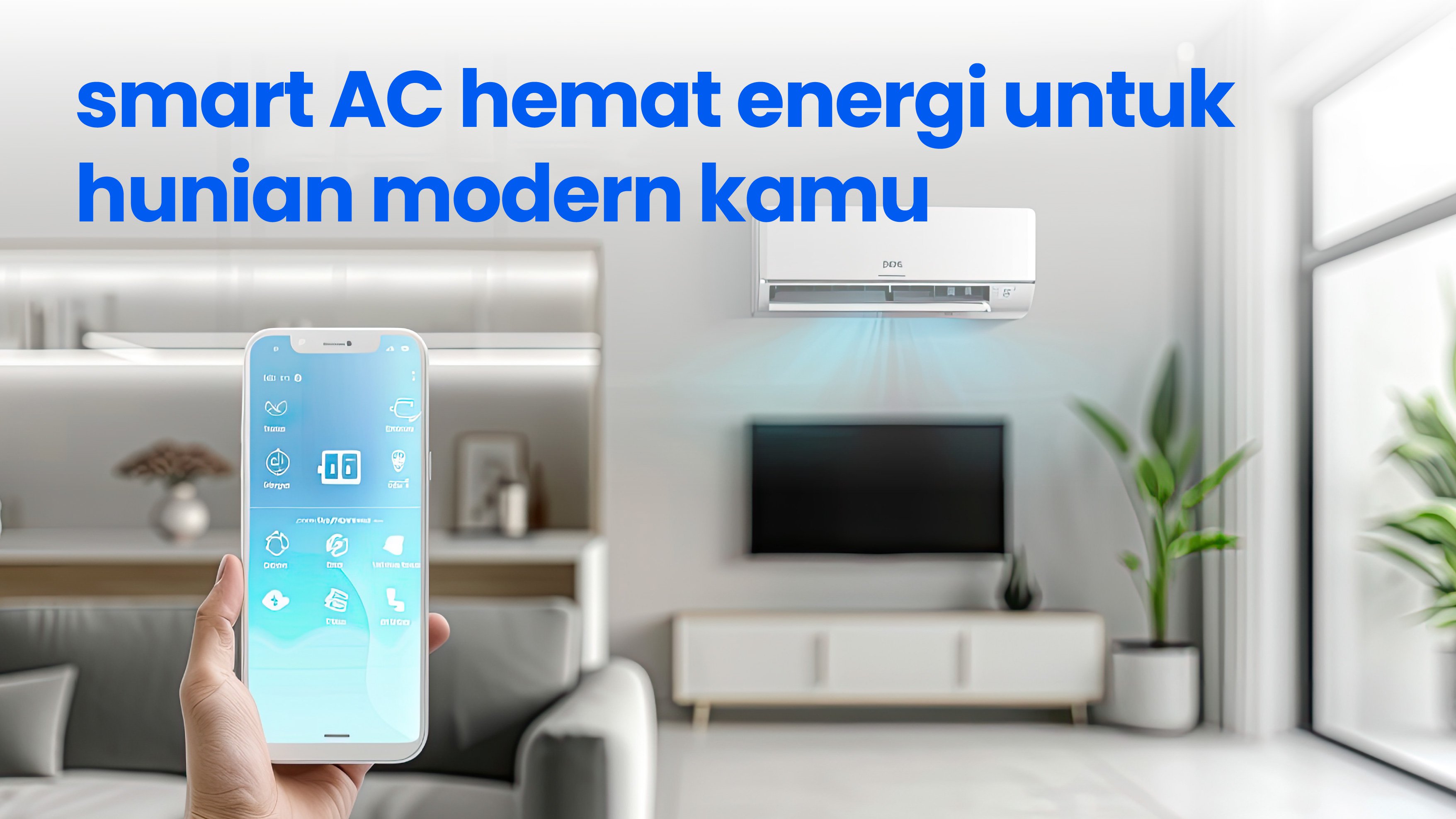
In the era of the increasingly popular smart home, electronic devices can now not only be operated manually but also controlled via smartphone and automated systems. One of the most rapidly evolving devices is the Smart AC, an air conditioner equipped with intelligent features to enhance comfort while reducing electricity consumption.
With the demands of modern living calling for greater energy efficiency, smart AC has become a smart solution for keeping your home cool without wasting electricity.
Key Takeaways:
- Smart AC helps save energy through automatic features such as auto-adjust mode, smart sensors, and temperature settings based on user habits.
- Remote control via an app makes AC usage more efficient and less wasteful, as users can turn off or adjust the AC at any time.
- A range of modern features, such as Wi-Fi control, power-saving mode, AI inverter, and real-time electricity consumption monitoring, make smart AC ideal for modern residences.
- Integration with the smart home ecosystem makes it easy to synchronize a smart AC with other devices such as a smart home hub, weather sensors, and smart speakers.
- BTN Smart Residence can support the comfort of modern residential occupants through features for routine bill payments and easier, more practical communication between residents and managers.
What Is a Smart AC?
A smart AC is an air conditioning unit equipped with Wi-Fi technology, sensors, and artificial intelligence, allowing users to control it from anywhere using a smartphone app. Unlike a conventional AC, a smart AC can adjust the temperature, monitor electricity consumption, and automate settings based on the occupant's activity.
According to several trusted sources on the first page of Google, smart ACs generally come with features such as remote control via an app, smart home integration, motion or occupancy sensors, energy-saving mode, automatic scheduling, and self-cleaning. These features not only provide comfort but also help save energy significantly.
The Advantages of Smart AC in Saving Energy
1. Smartphone Control
Smart AC allows you to turn on, turn off, or adjust the temperature of your AC remotely using just your phone. This helps prevent energy waste, for example, when you forget to turn off the AC before leaving the house.
2. Occupancy Detection
Some modern AC units such as those from Daikin are equipped with sensors that detect whether anyone is in the room. If the room is empty, the AC automatically adjusts the temperature to be more energy-efficient.
3. Eco or Energy Saving Mode
This feature makes the AC operate at optimal performance with minimal power consumption. Eco Mode regulates the compressor and fan so they do not work too hard.
4. Inverter Technology and Soft Start
Inverter technology helps maintain a stable temperature without drawing large amounts of electricity when the AC adjusts its performance. In some products such as the Polytron Smart Neuva Pro, the soft start feature at 450 VA is able to suppress power surges when the AC is first switched on.
5. Automatic Scheduling
You can set when the AC turns on or off. For example, the AC can automatically switch off when your sleeping hours are over or before you return from work.
6. Energy Consumption Monitoring
This is one of the most useful features. Through the app, you can see how much electricity the AC uses each day. This allows you to adjust your usage habits to be more economical.
7. Self-Cleaning Feature
Smart ACs typically have an automatic cleaning feature that keeps the evaporator clean. A well-maintained evaporator helps the AC operate more efficiently and consume less power.
8. Smart Home Integration
Smart AC can be connected to other smart home ecosystems, such as door sensors, automation systems, and voice assistants. This integration makes AC management more efficient, especially when combined with automatic routines.
Recommended Energy-Efficient Smart ACs
Here are some smart AC options available in Indonesia that are widely mentioned in Google search results.
1. Polytron Smart Neuva Pro
- Energy-efficient with 450 VA soft start
- Capable of monitoring electricity consumption in real time
- Auto-clean to maintain performance
- Full control via app
2. Daikin Inverter + Smart Wi-Fi Control
- Can be controlled via a Wi-Fi adapter
- "Intelligent Eye" sensor for greater efficiency
- Low Watt Mode for power savings
3. Xiaomi Mijia Air Conditioner Pro
- AI combined with inverter technology
- IoT ecosystem integration with the Mi Home app
- Minimalist design and energy-efficient
4. Samsung WindFree SmartThings AC
- Cool air without direct airflow
- Control via the SmartThings app
- Automatically adjusted energy-saving mode
Things to Consider Before Buying a Smart AC
Before choosing a smart AC for a modern residence, it is important to ensure that its features and technology truly match your needs. Here are several key factors that must be considered.
1. Match the Capacity (PK) to the Room Size
Choosing the right capacity ensures the AC operates optimally without wasting energy. As a guide: ½ PK is suitable for a small room (≤10 m²), 1 PK for a medium room (10–18 m²), 1.5 PK for a small living room (18–24 m²), and 2 PK for a large room (≥24 m²). If the capacity is too small, the AC will work harder and consume more electricity. If it is too large, energy is wasted through excessive cooling.
2. Check the Smart Features on Offer
Each brand offers different smart features. Choose the ones you truly need, such as Wi-Fi control and an app, auto mode or AI mode, voice assistant compatibility (Google Assistant or Alexa), motion and temperature sensors, and power consumption monitoring. The more comprehensive the features, the higher the price tends to be, so choose the ones most relevant to your habits.
3. Energy-Saving Technology
Make sure the smart AC has inverter technology or power-saving features such as AI Inverter, Eco Mode, Watt Control, and smart energy management. These features help keep electricity usage more stable and efficient over the long term.
4. Service Center Availability and Warranty
No matter how good the technology, after-sales service remains important. Make sure there is a long compressor warranty (5–10 years), a service center in your city, and that spare parts are easily obtainable. Since an AC is a long-term appliance, technical support is crucial.
5. Integration with the Smart Home Ecosystem
If you already use smart home devices, choose an AC that is compatible with Google Home, Apple HomeKit, Alexa, weather sensors, or other smart hubs. This integration will make your home automation more efficient and comfortable.
6. An Easy-to-Use Control App
A smart AC depends heavily on its app. Make sure the app has an intuitive interface, is stable and responsive, has complete features (scheduling, modes, power monitoring), and is easy to pair with your home Wi-Fi. A poor app will prevent you from getting the most out of your smart AC's features.
7. Budget and Long-Term Efficiency
Smart ACs are typically more expensive than regular ACs, but energy savings can reduce electricity costs over the long term. Consider the initial price, installation costs, and monthly electricity consumption. This will help you choose the product that offers the best balance between price and performance.
Tips for Maximizing Smart AC Use to Save More Energy
Smart ACs are designed to be more efficient, but the results can be far more optimal when used correctly. Here are some tips to help you save electricity without compromising on comfort.
1. Make Use of the Scheduling Feature
Set an automatic on and off schedule to match your daily routine. For example: the AC turns on 10 minutes before you arrive home and switches off at bedtime. This prevents the AC from running longer than necessary.
2. Use Energy Saving or Eco Mode
Almost all smart ACs come with an Energy Saving or Eco Mode feature. This mode stabilizes the temperature without making the compressor work too hard, resulting in lower electricity consumption.
3. Set the Ideal Temperature at 24–26°C
This temperature range is the most efficient point without making the room feel warm. Every 1°C reduction in temperature can increase energy consumption by up to 6–10%.
4. Optimize the Sensor or AI Mode Feature
If your smart AC has a motion sensor or AI mode, activate this feature so the device automatically adjusts its power based on the occupant's activity. When the room is empty, power consumption can decrease or the AC can switch off automatically.
5. Check Electricity Consumption Regularly
The energy monitoring feature in a smart AC app can show your AC usage patterns. You can see when consumption is at its highest and adjust your habits accordingly to save more.
6. Ensure the Room Is Properly Sealed
Closing doors, windows, and small gaps can reduce the workload of the AC. The less air leakage there is, the faster the room cools and the lower the energy consumption.
7. Regularly Clean the Filter and Check the Unit
Even though it is smart, an AC still requires maintenance. Clean the filter every 2–4 weeks and have it serviced at least once every 6 months. A dirty filter makes the AC work harder, resulting in greater electricity consumption.
8. Use It Alongside Other Smart Home Devices
If you have other smart devices such as a smart curtain or smart plug, integrate them with your smart AC. For example: the curtains automatically close when the outside temperature rises, the room cools faster without the AC having to work as hard.
9. Avoid Setting the Temperature Too Low When First Turned On
Setting the temperature directly to 16–18°C right away only forces the compressor to work extra hard. It is better to start at 24–26°C and then adjust gradually if needed.
10. Use the Geofencing Feature If Available
Some smart ACs can detect the location of your phone. When you move away from home, the AC turns off automatically; when you are approaching, the AC prepares the room so it remains comfortable upon your arrival.
Modern Residences Need a Neat Management System
With the growing number of smart home devices such as smart ACs, the experience of living in a modern residence becomes far more comfortable and efficient. However, residential management also needs to be made more practical.
This is why platforms such as BTN Smart Residence are becoming increasingly relevant. This app helps home or apartment residents manage routine bill payments, organize resident needs, and communicate with managers digitally.
The presence of BTN Smart Residence makes the concept of modern living more complete, not only smart in terms of technology, but also efficient in everyday management.
BTN Smart Residence: For a More Modern and Efficient Home
Smart AC offers a range of sophisticated features capable of reducing energy consumption and making a residence more comfortable. With smartphone control, smart sensors, energy monitoring, and smart home integration, this device is the ideal choice for a modern lifestyle.
When combined with a digital residential management system such as BTN Smart Residence, your living experience will feel more efficient, organized, and suited to the demands of the times.
Start implementing smart home devices like smart AC to save energy and enhance comfort. Complete your living experience with the BTN Smart Residence app so that residential management feels more practical and integrated.